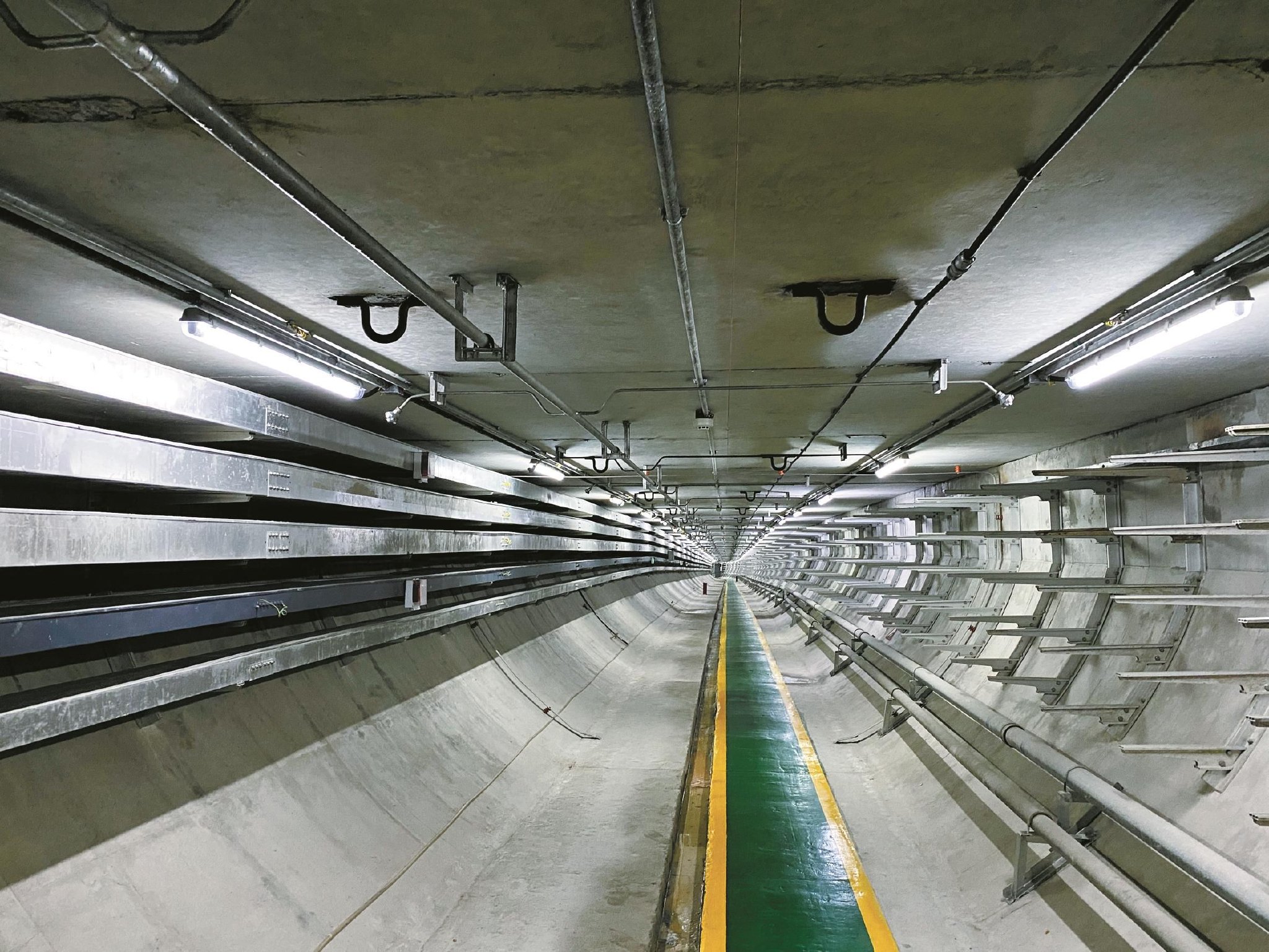
The urban underground utility tunnel is known as the “city’s lifeline” – all kinds of pipelines such as electricity, communication, water supply, gas, and heating are all housed within it. However, it is also one of the most nerve-wracking places in fire design: narrow and enclosed, with dense pipelines, high fire load, and extremely difficult firefighting. Once a fire breaks out, if it cannot be controlled, it can easily lead to a “chain reaction of fires”, causing the entire utility tunnel and even the surrounding infrastructure to collapse.
Traditional water sprinklers are almost incompatible with the utility tunnel: difficult drainage in the narrow space, large water volume causing water backflow, and serious secondary damage to cables and electrical equipment. While high-pressure fine water mist, with its characteristics of “zone control + small water consumption + electrically extinguishing”, is becoming the mainstream choice for fire protection in the utility tunnel.
Today, we will take the practical experience of Shanxi Xinyuancheng Technology Co., Ltd. in the field of utility tunnels as an example to analyze how high-pressure fine water mist zone control is carried out and why it can prevent “chain fires”.
- Why are underground utility tunnels most prone to “consecutive fires”?
The fire characteristics of underground utility tunnels determine that they are more difficult to control than ordinary buildings:
The narrow and long space, rapid smoke diffusion: Utility tunnels are usually 2.5–4 meters wide and 2.5–3.5 meters high, with a length of several kilometers. Fire smoke will spread rapidly along the tunnel, filling a range of several hundred meters within minutes, causing a sudden drop in visibility, and making escape and rescue almost impossible.
Dense pipelines, concealed fire sources: Cable trays and pipelines are stacked layer upon layer. Electrical fires often start from the inside of the cable tray and are difficult to detect immediately from the outside. By the time smoke emerges, a large area has already been burned.
Concentrated combustibles: The insulation layers of cables in the power compartments (PVC, cross-linked polyethylene, etc.) are combustible solids. During combustion, they release a large amount of toxic smoke (HCl, CO, etc.) and are prone to spread longitudinally along the cable direction.
Short firefighting window: The ventilation in the utility tunnels is poor and the heat dissipation is slow, causing the temperature to rise rapidly. If the initial firefighting window is missed, the fire will spread “jumpingly” along the cable trays, forming multiple points of fire.
In summary: Utility tunnel fires are not a question of “can they be extinguished”, but a question of “can the fire be controlled within a certain section”. - Core logic of zone control for high-pressure fine water mist in utility tunnels
The application of high-pressure fine water mist in utility tunnels is not about “how hard to spray”, but about “being divided finely” – through reasonable zone design, to tightly confine the fire within a small area and prevent it from spreading outward. - What is “zone control”?
Take the design concept commonly used by Xinyuan Chengliang in the utility tunnel projects as an example:
By compartment: Power compartments, comprehensive compartments, and gas compartments are independently set up with systems that do not affect each other.
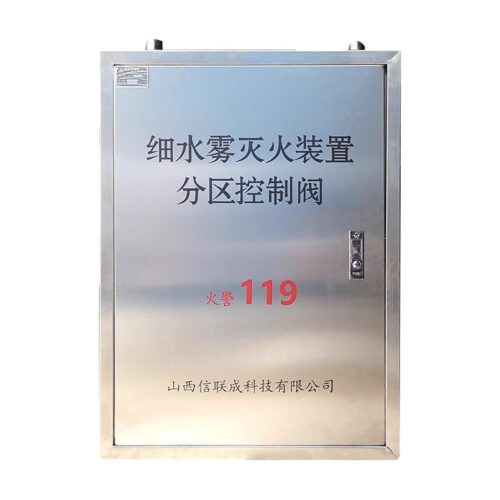
By length: Power compartments usually have a protection zone every 100–200 meters (specifically determined according to GB 50838 “Urban Utility Tunnel Engineering Technical Specifications” and design parameters), and each zone is independently equipped with regional valve boxes.
By detection linkage: Smoke or temperature sensors are installed in each zone. Once a certain zone alarms and is confirmed, only the regional valve of that zone is opened, and the other zones remain closed. - Practical process of zone control (taking a cable tray fire in the power compartment as an example)
Time node
System operation
Control effect
T+0s
Temperature-sensitive cables or smoke detectors within the zone trigger alarms
The fire is located in a specific section
T+10s
The fire alarm controller confirms the signal and automatically activates the valves in this area.
Only the affected area is sprayed; the other areas do not act.
T+15s
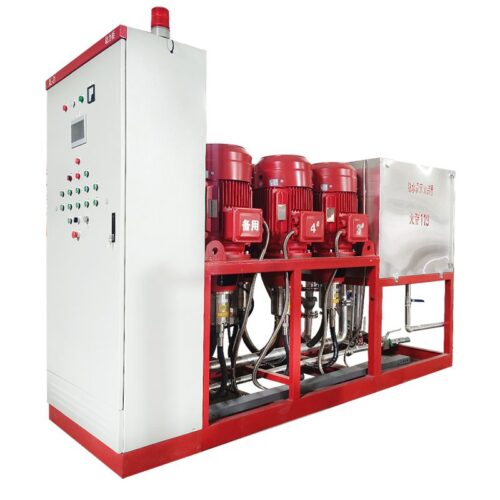
The high-pressure pump set was activated, and the fine water mist nozzles began to spray.
The mist droplets spread and covered the cable trays and corridor spaces.
T+30s
The temperature inside the corridor decreased significantly, and the concentration of smoke gas reduced.
The fire was suppressed within the zone.
Continuous spraying
The system continuously sprayed water to cool down until manual confirmation of the fire being extinguished was given.
To prevent re-ignition and ensure no missed smoldering areas. - Why can zone control prevent “chain fires”?
Physical isolation: At both ends of each zone, there are usually fireproof partitions (firewalls or fire doors), combined with the “only open a certain section” strategy of the zone valves, ensuring that the water spray only occurs in the burning section and not due to the full spray of the entire corridor causing a sudden increase in drainage pressure.
Continuous cooling to prevent re-ignition: Continuous spraying within the zone thoroughly cools the internal temperature of the bridge frame, preventing cable smoldering from spreading along the bridge frame to adjacent zones.
Controlling smoke without spreading: The fine water mist in the zone washes the smoke gas, reducing the concentration of toxic gases, and giving the personnel inspecting adjacent zones in the corridor more time for evacuation.
III. The practical advantages of Shanxi Xiliancheng in the pipe gallery scenario
Shanxi Xiliancheng Technology Co., Ltd., as the source manufacturer of high-pressure fine water mist, has accumulated a large amount of project experience in comprehensive pipe galleries and cable tunnels. The advantages of its system in power compartments fire protection mainly lie in the following aspects: - Stainless steel fine pipes, suitable for narrow spaces in pipe galleries
The internal pipelines in the pipe gallery are already very dense, leaving very limited space for fire protection pipes. Xiliancheng adopts stainless steel fine pipes (usually DN20–DN40), laid along the side walls or top supports, occupying little space and not competing with other pipelines for positions, with high flexibility in construction. - Fully self-produced, system matching degree high
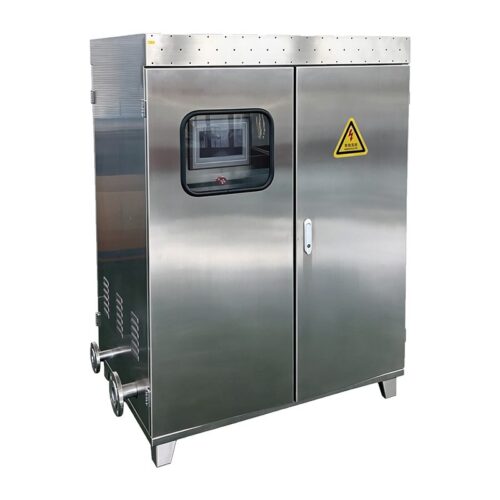
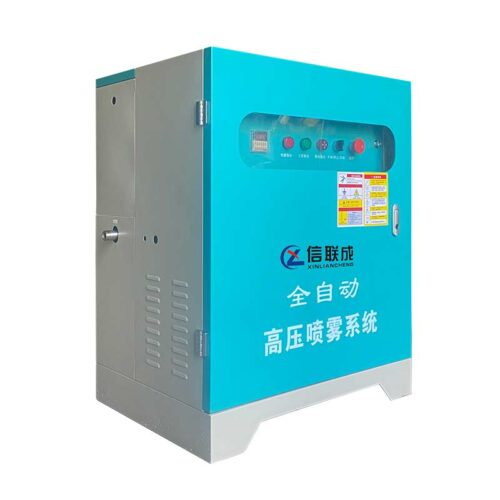
The pump sets, zone valve boxes, sprinklers, and control cabinets are all self-developed and produced, ensuring that each component is highly coordinated in terms of pressure parameters and flow. The response time and sealing performance of the zone valves have been strictly tested at the factory to avoid “opening when not supposed to, closing when not supposed to” problems due to incompatible valve components. - Intelligent linkage, precise response even without human intervention
The pipe gallery is an unmanned place, requiring extremely high automation of the system. The Xiliancheng system supports connection with the own monitoring platform (IBMS) of the pipe gallery to achieve:
Automatic confirmation of fire signals and linkage with zone valves;
Real-time upload of pump start-stop status, zone valve opening-closing status;
Remote manual intervention function (the control center can forcibly open/close any zone). - Electrical fire extinguishing, without power interruption
When a fire occurs in the power compartment, if power must be cut off to extinguish the fire, it will cause a large-scale power outage. The high-pressure fine water mist of Xiliancheng has a small droplet size, discontinuous spray, and high resistance, which can directly spray onto the live cable bridge frame without cutting off the power, ensuring fire extinguishing while maintaining normal power supply in non-burning zones.
IV. Three “invisible pits” in the design of high-pressure fine water mist for pipe galleries
Based on the experience of Xiliancheng in multiple pipe gallery projects, the following three design details are most easily overlooked but directly affect the actual effect of zone control:
⚠️ Pit 1: “Excessive” zone length
Some designs, in an attempt to save money, extend the zone to over 200 meters. However, the smoke gas in the pipe gallery spreads quickly, and an excessively long zone will lead to:
Longer confirmation time after the fire occurs, delaying the spray;
Uneven water mist coverage in a single zone, insufficient concentration of fog droplets at the far end.
Recommendation: The length of the zone in the power compartment should be strictly controlled within 100–150 meters. For the comprehensive compartment, it can be appropriately relaxed, but should not exceed 200 meters.
⚠️ Pit 2: “Copying” sprinkler spacing
The spacing of sprinkler heads in sprinklers is usually 2.5–3.6 meters. However, the droplets of high-pressure fine water mist are finer and the spray range is shorter. If the spacing is copied from sprinklers, there will be coverage blind areas.
Recommendation: According to Xiliancheng’s sprinkler parameters (spray angle, effective spray range), the spacing of sprinkler heads is usually controlled at 2.0–2.5 meters. When the bridge frame is multi-layered, side sprinkler heads should be set separately at each layer.
⚠️ Pit 3: “Taking it for granted” in drainage design
Although the water consumption of high-pressure fine water mist is extremely small, the slope at the bottom of the pipe gallery is limited. If the drainage ditch design is unreasonable, a small amount of water after fire extinguishing may still accumulate at the low points, posing a threat to the cable gallery.
Suggestion: Set a collection pit and an automatic drainage pump at each low point of each zone, and clearly specify in the design description that the drainage capacity is not less than 1.2 times the maximum spray flow of the system.
The core of fire protection for underground pipe galleries is not “extinguishing major fires”, but “preventing spread”. The zoning control design of high-pressure fine water mist essentially installs an “invisible firewall” for each section in the “urban blood vessel” of the pipe gallery – lock the area when the fire starts, extinguish the fire when the water mist reaches it, and prevent any fire situation from escalating into a full-scale disaster.
With its fully self-produced high-pressure fine water mist equipment, rich experience in pipe galleries and cable tunnels projects, and one-stop service capabilities from design coordination to acceptance and maintenance, Shanxi Xiliancheng Technology Co., Ltd. is becoming a technical partner for more and more urban pipe gallery projects.