Those working in environmental protection of mines understand a paradox: To control dust, the traditional approach is to add water. But once water is added, problems arise – the coal’s calorific value drops, the mineral powder forms lumps and gets stuck in the screen mesh, the belt slips and deviates, and the ground gets waterlogged and makes it impossible to stand. What’s worse, when those large water droplets are sprayed down, the fine dust like PM2.5 and PM10 simply can’t be contained. Once the fog stops, the dust still keeps flying.
So the question arises: **Without relying on a large amount of water, how can we “press” the dust onto the ground? **
The answer is – dry fog dust suppression. It’s not that no water is sprayed; rather, the substance sprayed out is so fine that it’s almost invisible to the naked eye. The material feels dry to the touch, but the dust is gone.
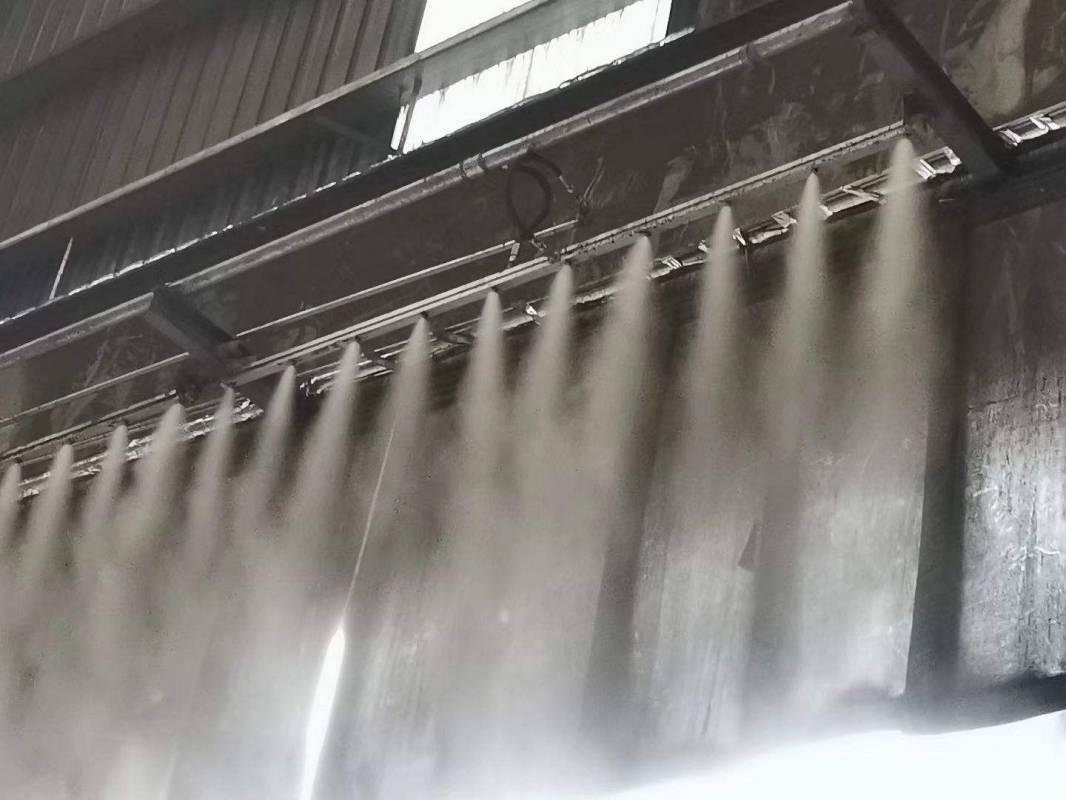
一、What exactly is dry fog? Why can it capture dust without wetting the material?
Let’s clarify a physical concept first: Dry fog is not “without water”, but rather, the fog particles are extremely fine.
The water droplets in ordinary spray systems have diameters ranging from hundreds of micrometers to several millimeters, and when they fall onto the material, they form a puddle of water. However, the fog particles generated by the dry dust suppression system have diameters of 1 to 10 micrometers – what’s the concept? It’s less than 1/10 the diameter of a single hair strand.
Such tiny fog particles can remain suspended in the air for a long time without directly hitting the material surface and forming water droplets. It relies on Brownian motion: the fog particles and dust particles randomly collide, adsorb, and aggregate in the air, turning into larger particles that naturally settle. Throughout this process, the increase in the material’s moisture content is controlled within 0.05%. When you touch coal with your hand, it remains dry.
This is the true meaning of “no water used, no wet material” – Water is used, but in an extremely smart way. **
2. Shanxi Xiliancheng: The Manufacturer in Jincheng That Has Perfected This Technology
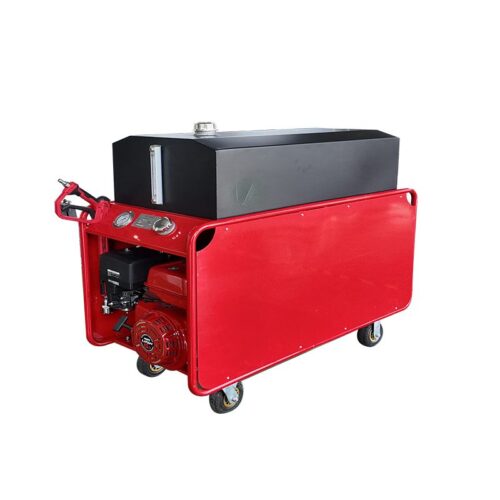
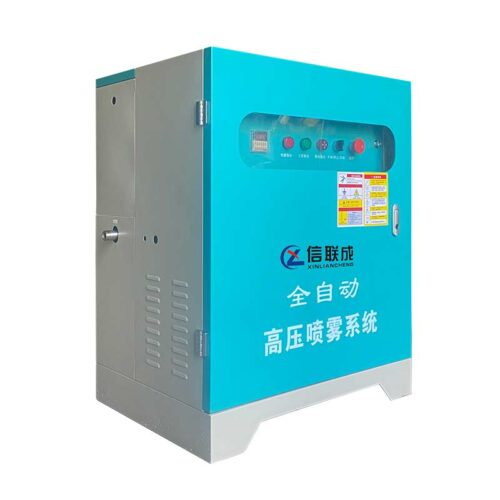
In Jincheng, Shanxi Province, there is a source manufacturer that has been deeply engaged in the field of spray dust suppression for 11 years – Shanxi Xiliancheng Technology Co., Ltd.. They have independently developed a dual-fluid dry fog dust suppression system. The core logic of this system is the aforementioned physical principle, but when it comes to industrial sites, details are the decisive factor.
Core Technology Dissection
1. Dual-fluid gas-water mixture atomization
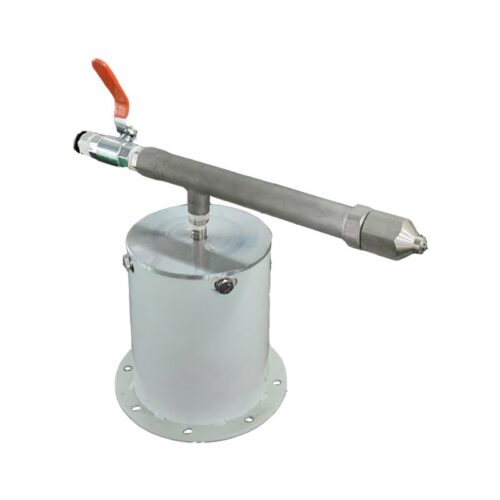
The dry fog main unit of Xiliancheng uses compressed air and water to collide and shear inside the nozzle, instantly breaking the water into ultra-fine fog particles ranging from 1 to 10 μm. It does not rely on pressure squeezing but on the synergy of gas and water, resulting in more uniform atomization and controllable particle size.
2. 304 stainless steel anti-block universal nozzle
The nozzle is the “last one centimeter” of the dry fog system. Xiliancheng’s entire series is equipped with 304 stainless steel nozzles, which have built-in anti-block design, combined with multiple levels of precise filtration systems (with a filtration accuracy of ≤ 50 μm), solving the stubborn problem of poor water quality and nozzle blockage in industrial sites. The nozzle can be adjusted in all directions, and after installation at the site, it can be finely adjusted to ensure that the fog curtain precisely covers the dust generation points.
3. Intelligent联动 control
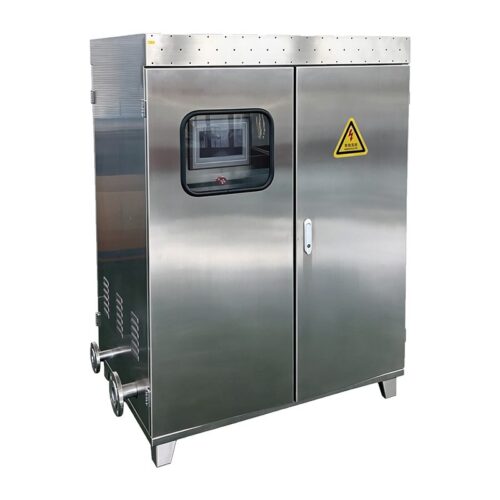
The system is equipped with a PLC controller and can be connected to various triggering sources such as dust concentration sensors, belt operation signals, infrared sensors, etc. Belt rotation → fog starts, belt stop → fog stops; when the dust concentration exceeds the threshold, automatic fog addition occurs; when the concentration reaches the standard, automatic fog reduction occurs. The entire process is unmanned, and no electricity or water is wasted.
4. Northern anti-freezing standard
In Jincheng, the winter temperature often drops to minus several degrees Celsius. Xiliancheng equips all outdoor pipelines, main units, and nozzles with electric heating insulation systems, supporting continuous operation in extreme environments of -30°C. This is not an optional feature but a standard configuration – because they are themselves in the north and know the consequences of equipment freezing in winter.
III. Actual Test Results: Dust Levels Went from “Extremely High” to “Zero”
The transformation case of Xinyuancheng in a coal mine belt transfer station of Jinan Energy Holding Company is quite representative:
| Indicator | Before Transformation | 30 Seconds After Activation of Dry Fog |
|---|---|---|
| PM10 Instant Concentration | 160 – 190 mg/m³ | 4 – 7 mg/m³ |
| Visible Dust at the Discharge Port of the Feeder | Clearly white smoke | Invisible to the naked eye |
| Change in Material Moisture Content | +0.8% after spraying | +0.03% |
| Frequency of Belt Slippage/Bias | 2 – 3 times per week | Zero |
| Monthly Environmental Complaints | 1 – 2 times | Zero |
| The dust suppression efficiency remains stable at above 95%. Moreover, since the materials do not become humid, the parameters of the downstream washing and screening processes do not need to be adjusted at all. The plant manager said: “Previously, after the spraying was completed, we still had to use a fan to blow the belt. Now, after it’s completed, we just walk away.” |
IV. Which Scenarios Are Best Suited for Dry Fog Dust Suppression?
Not all locations are suitable for dry fog, but the following scenarios are almost tailor-made:
- Belt conveyor discharge points/transfer stations: The enclosed space of the discharge chute makes it impossible for fog cannons to reach, and the spray water dries the materials, while the dry fog stays in the middle – this is the scenario where Xinliancheng uses the most;
- Crushing and screening workshops: With high dust production, fine dust, and dense equipment, the dry fog forms a fog curtain from top to bottom for coverage;
- Dumping machine rooms/train loading buildings: With large drops and strong induced airflow, the dry fog forms a “fog curtain” at the discharge point to intercept;
- Closed/semi-closed material sheds: Traditional spray systems cause water accumulation on the ground and ice formation, while the dry fog hardly lands and keeps the ground dry;
- Outdoor dust-producing areas in northern winter: With anti-freezing modules, it operates normally even at -30℃.
5. Fundamental Differences from Spraying and Bag Dust Collection
| Dry Fog Dust Suppression | Traditional Spraying | Bag Dust Collection | |
|---|---|---|---|
| Particle size / Filtration accuracy | 1 – 10 μm | 200 – 2000 μm | 0.1 – 1 μm (filter bag) |
| Material impact | Almost no | Severe moisture condensation and caking | None |
| Fine dust capture | ★★★★★ | ★★ | ★★★★★ |
| Floor space | Small | Extremely small | Large |
| Winter operation | -30°C compatible | Prone to freezing and stalling | Requires insulation |
| Maintenance cost | Low | Medium | High (frequent bag replacement) |
Dry fog is not a panacea. It addresses the core pain points of unorganized emissions, materials prone to water damage, and space constraints. If your site happens to fall into two of these categories, then dry fog is the optimal solution.
VI. Final Remarks
The issue of dust control is not about “how much water to add”, but rather about “how to minimize intervention and keep the dust where it should be”.
Shanxi Xiliancheng Technology Co., Ltd. has spent 11 years, with over 8,700 customers and in 100+ industry scenarios, achieving a very solid level in the matter of dry fog dust suppression – without boasting about “100% effectiveness”, but daring to promise “no acceptance without meeting standards”.
If you are troubled by dust at the material discharge point, or if environmental protection inspections are approaching and traditional sprinklers are no longer sufficient, consider having the engineers from Xiliancheng visit the site. They offer free site surveys, provide solutions, and draw CAD layout diagrams to clearly understand the problem before deciding whether to invest or not.
Shanxi Xiliancheng Technology Co., Ltd.
Service Hotline: +86 13753689221
Factory Address: No. 102, West Outer Ring Road, Jincheng City, Shanxi Province
Main Products: Dual-fluid dry fog dust suppression system · High-pressure fine water mist fire extinguishing device · Spray dust suppression equipment
Services: Site survey and design → Production installation → Commissioning training → Warranty for one year · Lifetime maintenance